Cycle Touring and Bikepacking: Where to Start
A summer guide to loading up a bike and going somewhere new
Cycle touring’s one of those trips that’s more fun than it really should be. You load up the bike with what you need for a few nights, point yourself somewhere new, and go. That’s more or less it.
It’s caught on again over the last few years. The kit is better than it has ever been, plenty of us have gone off airports, and summer evenings in the UK are long enough to actually get somewhere on a Wednesday after work. If you’ve been thinking about giving it a go, this is roughly what we’d tell you over a coffee in the shop.
The Bike
When people come in asking about touring for the first time, we usually point at two bikes. Both are made by Genesis and both are worth your time.
The Croix de Fer is the all-rounder. Gravel, tarmac, back lanes, mixed days out. Comfortable on the sort of miles that add up when you’re riding all day. If you’re going down the fast, light, credit-card touring route with a bar bag and a small saddle pack, this is the one to look at first.
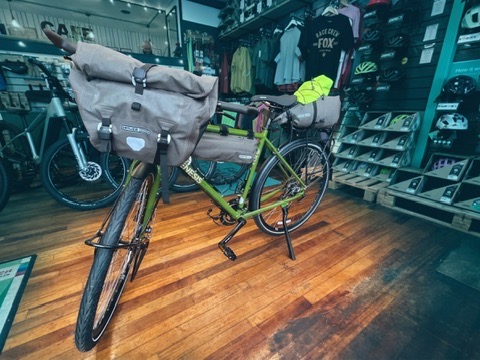
The Tour de Fer is closer to a full-on tourer. Racks, mudguards, dynamo lighting, wide tyres, and a geometry that stays planted when you load it up rather than pulling around under you. Camping trips, cooking your own dinner, carrying everything yourself. If that’s the plan, this is the bike.
Both are steel-framed and built to be worked hard. They’ll still be riding well long after this year’s carbon has been listed on eBay.
The Bags
For carrying anything on the bike, Ortlieb takes some beating. Welded seams, roll-top closures, gear that stays dry when the weather turns. It matters more four days into a trip than it does on a Sunday club ride, when you know you’ll be home in an hour anyway. Ortlieb has been the touring standard for decades and nothing else has really caught up. We stock the full range in the shop, from small bar bags for day trips through to the big rear panniers people use for months on end.
A quick word on packing. Heavy stuff wants to sit low and central, so the bike doesn’t wander around under you when the road tips down. Anything you want to reach while you’re moving, waterproofs, snacks, a spare tube, belongs at the top of the pannier or in a bar bag. And take less than you think you need. Everyone overpacks the first time. Everyone.
Where You’re Sleeping
The where’s-tonight question is entirely up to you, and plenty of trips end up mixing more than one option.
Camping is the classic, and probably the best introduction. It’s cheap, flexible, and there’s no shortage of cyclist-friendly campsites across the Dales and further afield. Wild camping is an option in various parts of the country if you know where you’re allowed and how to go about it sensibly.
Bothies and hostels sit somewhere in between. Cheap enough, sociable, and often in the sort of remote spots touring cyclists actually want to end up in. YHA has had a bit of a comeback in recent years, and one or two of its locations are worth building a trip around by themselves.
Then there’s the credit-card version. Ride all day, eat well, sleep in a bed with sheets on it, do it again tomorrow. Not the cheapest way to travel, but a lovely one, and the version plenty of us end up defaulting to once we’ve done a few nights on a roll mat.
Clothing
Cycling clothing on tour has to work harder than it does on a Sunday ride. It needs to dry overnight, deal with the weather changing on you, and pack down small enough that you’ll actually take it.
A decent rain jacket earns its place even in July. British weather being British weather. Bib shorts you get on with are non-negotiable, since the wrong pair on day one makes for a very long week. Take shoes you can walk into a pub in, because you’ll spend more time off the bike than on a normal day ride. And pack something warm for evenings. It gets cold quickly once you stop moving.
Guidebooks and Maps
Yes, in 2026, still.
Phones are excellent at navigation right up until your battery dies or the signal drops, which will happen at the worst possible time. We stock guidebooks for most of the classic UK routes, plus maps of the areas you’ll actually want to ride. Nothing beats laying a real map out and planning the whole thing in one go before you leave. And there’s something about reading a guidebook in a tent while your dinner’s still warm that no app has ever quite replicated.
The Stuff People Forget
None of what follows is really cycling kit, but forgetting any of it will make the trip harder than it needs to be.
Phone charger and cable, obviously. A small power bank if you’re camping and won’t see a plug for a day or two. A basic first aid kit: blister plasters, painkillers, a bit of tape. Cash for the B&B or country pub that mysteriously won’t take card. Sun cream, especially in summer, since a long day on the bike will burn you well before you notice. Something to read or listen to in the evenings, because you’ll have more time than you think once dinner’s out of the way. And a small dry bag for your phone and wallet when it rains, which it will.
Get the Bike Sorted First
The advice most experienced tourers give is the same one: have the bike properly checked over a couple of weeks before you leave.
A tired drivetrain or a dodgy bearing has a habit of making itself known at exactly the wrong moment, usually somewhere the signal’s died and the nearest bus stop is half a day’s walk away. Book the bike in a fortnight before you go and we’ll run through it end to end. Then it isn’t the thing you have to worry about.
Where to Point It
First time touring? Start local. It’s the fastest way to find out if it suits you, and there’s plenty on our doorstep.
A one-nighter from Settle is a good introduction. Out through Ribblesdale, over into Dentdale, camp somewhere near Sedbergh, and back the next day on different lanes. Two days, one night, and enough of a taste to know if the touring life suits you without committing to a whole week.
If you want something longer, the Way of the Roses is the classic. Morecambe to Bridlington coast to coast, straight through the middle of the Dales, and about as good as UK touring gets over four or five days.
There’s plenty further afield too. The Great North Trail, the North Sea Cycle Route, or a full lap of Scotland if you’ve got a few weeks. But don’t overlook a weekend as your first go. Every touring cyclist you’ll ever meet started with one, and most will tell you the first trip taught them more than any of the ones after.
Just Go
The main thing that stops people going touring is the sense they aren’t quite ready. Wrong bike, wrong bags, wrong forecast, wrong month. The list gets longer the more you stare at it.
Nobody’s ever really ready for their first trip, and no setup is perfect. Something always gets left at home. Bikes and people both handle a lot more than they tend to get credit for, and the only real way to test either is to load up and see what happens.
Pop in if you’d like some route ideas, or a hand working out what kit you actually need. And send us a postcard.